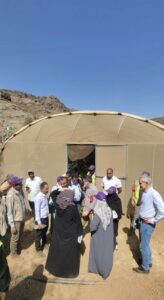
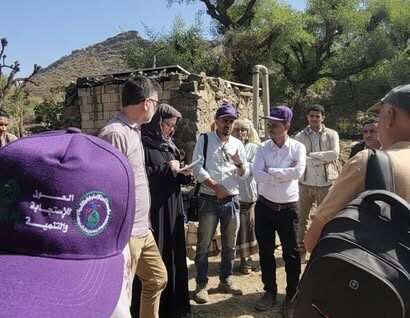

 As part of field monitoring and impact measurement, a delegation from Oxfam visited the Climate-Adaptive Smart Agriculture Project implemented by Assistance for Response and Development (ARD‑Y). The delegation included the Humanitarian Affairs Coordinator, the Country Director, the Organization’s Projects Manager in Yemen, the Organization Director, and the Food Security Officer in Al-Turbah.
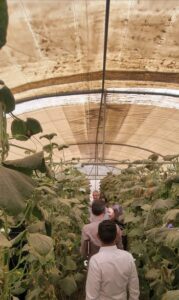
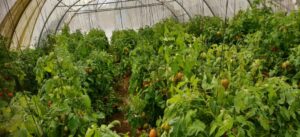
 During the visit, the delegation met with female and male beneficiaries and toured the greenhouses for cucumber and tomato production. They listened directly to success stories from female agricultural graduates about the project’s positive impact on income levels and sustainability, describing it as a fully integrated success story.
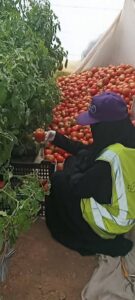
 The beneficiaries confirmed that empowering them with greenhouses—alongside technical and financial training and market linkages—enabled continuous production of cucumbers and tomatoes. They explained that the average production over just three months from the start of cultivation reached 140–150 crates per beneficiary per greenhouse, while continuing cultivation and harvesting independently—an achievement reflecting the model’s efficiency and sustainability.
 The Oxfam delegation expressed its appreciation and gratitude for the tangible impact heard and witnessed in the lives of beneficiaries. The Director of Al‑Khyami Agricultural Institute also praised the project’s role in introducing hydroponics and greenhouses as educational, extension, and productive tools for the institute—one of the project’s complementary activities—highlighting that it represents the first hydroponic agriculture experience at the governorate level.
 The visit was attended by the Food Security Cluster Coordinator (Taiz & West Coast), the Shelter Cluster Coordinator in Taiz, the President of ARD-Y, the Director of the Industrial Agricultural Institute, and the Head of the Crop Production Department.
 Together toward smart agriculture, sustainable income, and real women’s empowerment.